
MRT
2026
2026
The 2026 International Conference on Medical Research and Translation (MRT 2026) & 3rd China-Europe Scientists Forum
December 28 to 31, 2026Bo'ao Lecheng, Hainan Province, China

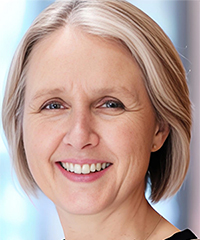
Siobhan Burns is the Professor of Translational Immunology at University College London. She is a clinical academic with an interest in primary immunodeficiency disorders (PID). Originally trained in paediatric immunology, she worked at UCL Institute of Child Health and Great Ormond Street Hospital before moving to the Institute of Immunity and Transplantation and the Adult Clinical Immunology department at the Royal Free Hospital, London. Prof Burns has a special interest in rare monogenic causes of immunodeficiency. Her research group is focused on understanding the underlying molecular and cellular mechanisms that give rise to PID, with a particular interest in how genetic mutations associated with PID impact the function of immune cells. She has published more than 200 peer-reviewed articles and holds a Google Scholar h-index of 53.
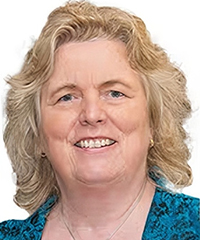
Professor Dr. Nadia Harbeck heads the Breast Center and the Oncology Day Clinic at the Department of Gynecology and Obstetrics at Ludwig-Maximilians University Munich (LMU). She is Professor of Conservative Oncology at LMU Munich. Prof. Harbeck is a member of the AGO Breast Cancer Commission, which publishes the evidence-based AGO recommendations for the diagnosis and treatment of breast cancer annually. She is Co-Director of the West German Study Group (WSG). From 2009 to 2015, she was a member of the Executive Board of the EORTC and Chair of the EORTC Translational Research Division. Professor Harbeck is a principal investigator or steering committee member of numerous national and international breast cancer studies, with a focus on novel targeted therapies. Prof. Harbeck is the author of more than 480 publications in peer-reviewed journals (h-index 82) and is coordinating editor-in-chief of the journal Breast Care (Karger Verlag). She is a member of numerous international consensus conferences on breast cancer, such as ABC (advanced breast cancer), BCY (breast cancer in young women), and the St. Gallen Consensus Conference on early breast cancer. For her clinical-translational research, Prof. Harbeck received the ESMO Lifetime Achievement Award in 2020, as well as numerous other prizes and awards, such as the 2015 Bavarian Cancer Patient Prize, the Claudia von Schilling Prize in 2012, the EBCC Prize in 2008 (Emmanuel van der Schueren Lecture), the AGO Schmidt-Matthiesen Prize in 2002, an AACR Prize in 2001, and the ASCO Fellowship Merit Award in 2001 for the best submitted abstract.
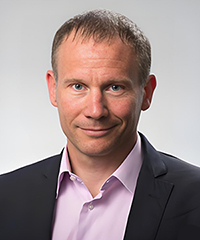
Prof. Olivier Michielin obtained a Masters of Physics in 1991 at the Swiss Federal Institute of Technology and a Medical Degree from the University of Lausanne in 1997. He pursued his PhD training under the supervision of Jean-Charles Cerottini (Ludwig Institute) and Martin Karplus (Harvard and Strasbourg Universities, Chemistry Nobel Prize Laureate 2013). He was appointed Group Leader of the Swiss Institute of Bioinformatics in 2002 and became an Assistant Professor at the Medical Faculty of Lausanne in 2004. In parallel, he has trained as a medical oncologist and obtained his board certification in 2007 at the Department of oncology of the Lausanne University Hospital. Prof. Olivier Michielin is mainly focused on translational and precision oncology, developing new molecularly defined therapeutic approaches based on original bioinformatics techniques developed in his laboratory, as well as precision oncology programs based on multi-omics strategies and data science at the national level. Prof. Olivier Michielin is currently the Chair of the Department of Oncology and the Precision Oncology Service at the Geneva University Hospital, and the co-Director of the Swiss Cancer Center Léman (SCCL).
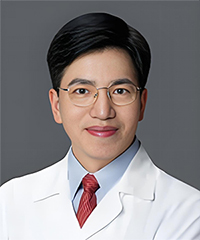
William C. Cho is Senior Researcher at Department of Clinical Oncology, Queen Elizabeth Hospital, Hong Kong, China. He is a Chartered Scientist granted by the Science Council (UK) and a fellow member of several institutes, including the Institute of Biomedical Science (UK), Hong Kong Institute of Biomedical Science, and Hong Kong Society for Molecular Diagnostic Sciences. Besides, he is also a registered Chinese medicine practitioner. Dr Cho has published more than 600 peer-reviewed papers on international academic journal papers and dozens of books covering cancer biomarkers, proteomics, and microRNAs. He serves as the editor-in-chief, editor and associate editor of a number of international medical journals. Dr Cho is also an international renowned grant reviewer of the Hope Funds for Cancer Research (USA), Cancer Research (UK), MRC Research Grant (UK), Health Research Board (Ireland), Science Foundation (Ireland), Istituto Toscano Tumori (Firenze), The Foundation Fournier-Majoie for Innovation (Brussels), National Medical Research Council (Singapore), The Medical Research Council (South Africa), and Academia Sinica Investigator Award (Taiwan), etc. And he was recognized as a Highly Cited Researcher in 2023 by Clarivate.
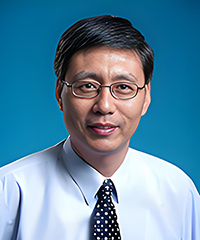
Prof. Yu received his undergraduate education at the Henan University of Traditional Chinese Medicine, and obtained his PhD degree in biochemistry from the Hong Kong University of Science and Technology. Before joining the Hong Kong Baptist University, Prof. Yu once worked at China Pharmaceutical University, Nagasaki University, Hong Kong University of Science and Technology, Xiamen University and University of Macau. Prof. Yu is known for his research in herbal pharmacology, and in processing of Chinese medicinal materials. He has published more than 200 peer-reviewed research papers. Consun Pharmaceutical Group Limited and Laboratory JaneClare Limited in collaboration with Prof. Yu's team established "Consun Chinese Medicines Research Centre for Renal Diseases" and "JaneClare Transdermal TCM Therapy Laboratory", respectively, in Hong Kong Baptist University. Prof. Yu serves as Editorial Board Member/Associate Editor/Executive Editor/ Consulting Editor for more than 30 journals, such as LiShizhen Medicine and Materia Medica Research, BMC Complementary Medicine and Therapies, Current Topics in Nutraceutical Research, Journal of Alternative, Complementary & Integrative Medicine, Pharmacological Research.
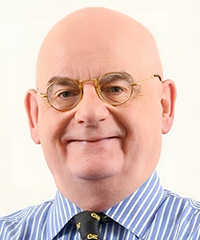
Professor Barry Halliwell is Senior Advisor, Academic Appointments and Research Excellence, Office of the Provost. Professor Halliwell graduated from the University of Oxford with BA and D.Phil degrees. He holds a D.Sc degree from the University of London. He was a faculty member with the University of London, King’s College from 1974 to 2000. From 1995 to 1999, he was a Visiting Research Professor of Internal Medicine and Biochemistry with the University of California Davis, School of Medicine, Divisions of Cardiology and Pulmonary/Critical Care Medicine. Professor Halliwell was a Visiting Professor of Biochemistry to NUS from 1998 to 2000. He was Head of the University’s Department of Biochemistry from 2000 to 2007 and was Deputy Director, Office of Life Sciences from 2001 to 2003. From 2003 to September 2008, he was the founding Executive Director of the newly-formed NUS Graduate School of Integrative Sciences and Engineering. From Mar 2006 to May 2015, he was the Deputy President (Research and Technology) at NUS. From Jun 2015 to May 2018, he was the Senior Advisor to the President at the National University of Singapore. The Thomson Reuters lists Professor Halliwell as one of the world’s most highly-cited researchers in Biology and Biochemistry and his Hirsch Index is 169. He has received numerous research awards, including Singapore President’s Science and Technology Medal (2013), the “Lifetime Achievement Award” by the Society for Free Radical Biology and Medicine in the USA for overall sustained excellence in the field and the Ken Bowman Research Award for outstanding achievements in the field of cardiovascular research from the Institute of Cardiovascular Sciences (Canada). He was identified by Clarivate Analytics in 2021 as a Citation Laureate for an exceptional citation record within the WOS. Professor Halliwell is a member of several editorial boards including FEBS Letters, Biochemical and Biophysical Research Communications and Antioxidants and Redox Signaling. He is regularly invited as a lead speaker at major conferences and other prestigious events worldwide and is a member of several expert advisory panels to leading Universities, companies and government agencies.
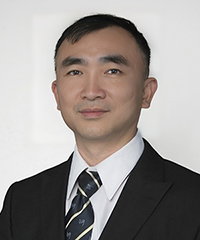
Professor Guokai Chen is currently the Vice Dean of the Faculty of Health Sciences at the University of Macau and the Director of the Zhuhai UM Science & Technology Research Institute. After obtaining his PhD from Baylor College of Medicine, Professor Chen conducted postdoctoral research at Baylor College of Medicine and the University of Wisconsin. Prior to joining the University of Macau, he was an Assistant Scientist at the University of Wisconsin and then established the Pluripotent Stem Cell Core Laboratory and the Genetic Engineering Core Laboratory at the National Institutes of Health (NIH), serving as its director. During his time at the University of Macau, he received the Best Teacher (Outstanding Teaching) Award in 2018 and the Best Teacher (Outstanding Service) Award in 2019. Professor Chen has long been engaged in research on directed differentiation of human embryonic stem cells, stem cell metabolic regulation mechanisms, and stem cell technology development. His research team is dedicated to developing novel technologies to promote the application of stem cells in basic and translational research, and has successfully industrialized several stem cell research findings. Professor Chen is also the Chairman of the Executive Committee of the Macau Stem Cell Research Association and a member of the American Chinese Biosciences Society.
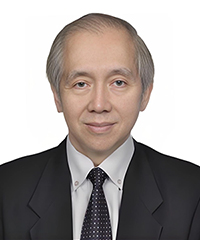
Dr. Saw Aik is a distinguished Orthopaedic Surgeon, specializing in Pediatric Orthopaedics and Limb Deformity Correction, who retired from Universiti Malaya (UM) in 2022 but continues his vital role as an Honorary Professor, nurturing future doctors and managing complex cases at UM Specialist Centre (UMSC). He is highly respected for his expertise, humble demeanor, extensive research (publishing on foot deformities, clubfoot, fractures) and dedication to mentorship and charity work, embodying altruism in medicine.